When it comes to international logistics, understanding "What documents are required for international shipments" is crucial. David Ellis, a global trade consultant, emphasizes, "Proper documentation is the backbone of smooth international trade." Missing or incorrect paperwork can lead to costly delays.
International shipments typically require several key documents. These include the commercial invoice, packing list, and bill of lading. Each serves a specific purpose in ensuring the goods are cleared through customs. In some cases, shippers may also need export licenses or certificates of origin. The exact requirements may vary by country or product type.
Navigating the documentation process is often challenging. Businesses must stay informed about the latest regulations. These can change frequently and may be different from one country to another. It’s essential to have a reliable resource or expert available to address these changes. Each mistake can have significant financial implications. Thus, proper planning and expert guidance become indispensable in ensuring compliance.
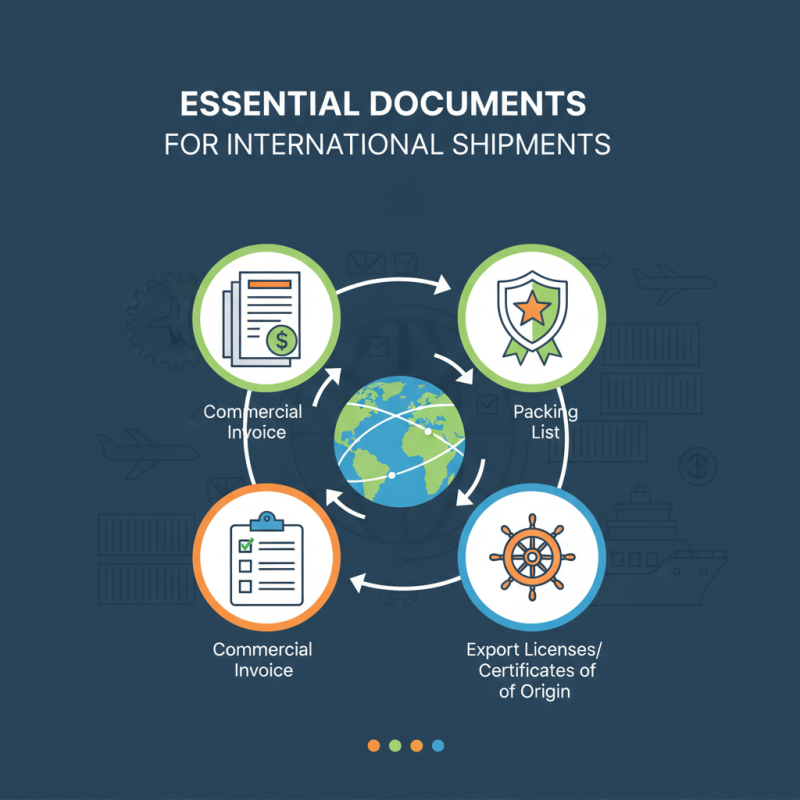
Essential Documents for International Shipments
When shipping internationally, several documents are crucial for ensuring smooth transit. One essential document is the Bill of Lading (B/L). This document serves as a contract between the shipper and the carrier. It includes details like shipment origin, destination, and content specifics. According to the International Chamber of Commerce, over 80% of global trade relies on this document.
Another vital document is the Commercial Invoice. This invoice outlines the goods being shipped, their value, and the terms of sale. It is required by customs departments in various countries. A study from the World Trade Organization indicates that proper invoicing can reduce delays in customs clearance by approximately 30%. However, inaccuracies in this document often lead to complications, highlighting the importance of attention to detail.
Additionally, the Certificate of Origin is necessary in many scenarios. This document verifies the origin of goods, affecting tariff rates and trade agreements. Research shows that misrepresentation can lead to increased costs. Each shipment requires careful preparation. Missing or incorrect documents can cause unforeseen challenges.
Customs Declaration Forms and Their Importance
When shipping goods internationally, customs declaration forms play a crucial role. These documents provide customs officials with essential information about the shipment. Accurate declarations help avoid delays and fines. According to the World Customs Organization, incorrect declarations account for over 20% of shipment delays.
Customs forms typically include details like the type of goods, their value, and origin. Missing or incorrect information can lead to significant issues. Each country has its own requirements, making research vital. In 2022, a survey revealed that 35% of businesses faced customs-related delays due to incomplete paperwork.
Tips: Always double-check your declarations for accuracy. It is wise to consult with a customs specialist before shipping. Also, keep copies of all documents for your records. This practice can help resolve disputes should they arise.
Understanding the importance of
customs forms adds clarity to the shipping process. Being proactive can save time and money. Avoiding common pitfalls is essential. Simple mistakes can have cascading effects on your supply chain.
Commercial Invoice: Key Details and Requirements
When preparing for international shipments, the commercial invoice is crucial. This document serves as a bill for the goods, detailing what is being sent. A well-prepared commercial invoice should include key elements. These include the seller's and buyer's information, a detailed description of the items, their value, and the currency used. Accurate information helps in customs clearance.
Each item should be listed clearly. Avoid vague descriptions. Include quantities, unit prices, and total values. This prevents confusion and delays at customs. It's important to ensure that the invoice matches the shipment exactly. Discrepancies can lead to serious issues, including fines or confiscation.
Another significant aspect is the declaration of the origin of goods. Proper documentation minimizes the risk of rejection. Adding terms of sale and payment methods also streamlines the process. However, many businesses overlook these details. Regular reviews of your invoicing practices can help avoid common pitfalls. Relying solely on templates may lead to errors. It's essential to understand each requirement.
Essential Documents Needed for International Shipments
Bill of Lading: Types and Functions in Shipping
The Bill of Lading (BOL) serves as a critical document in international shipping. It acts as a receipt, showing that goods have been loaded onto a vessel. There are several types of Bills of Lading, including straight, order, and sea waybills. Each type has unique features that suit different shipping needs. For instance, a straight BOL is non-negotiable, while an order BOL allows for transferability.
Understanding the functions of the Bill of Lading is essential for navigating international trade. It ensures that the shipper and consignee have clear agreements. However, mistakes can occur. Incorrect details can lead to shipment delays or even legal issues. Companies must verify the accuracy of the information provided in this document. The BOL also serves as a document of title. This means it can be used to claim ownership of the goods during transit.
In shipping, attention to detail is crucial. A misplaced document can disrupt operations. The importance of training teams in the correct use of the Bill of Lading cannot be overstated. Companies often overlook this, leading to costly errors. Comprehensive understanding and meticulous handling of the BOL are necessary for smooth shipping processes.
Packing List: Ensuring Compliance and Accuracy
When shipping internationally, a packing list is a crucial document. It details each item in the shipment, including quantities and descriptions. This list helps ensure compliance with customs regulations and reduces delays. According to the International Shipping Association, accurate documents can enhance shipment efficiency by up to 40%.
Errors on the packing list can lead to costly mistakes. Each discrepancy might result in fines, delays, or even product returns. In a recent survey, 30% of international shipments faced compliance issues due to incorrect documentation. Thoroughly reviewing the packing list before shipment minimizes these risks.
**Tip:** Use a checklist format for your packing list to easily track items and their corresponding details. Regular audits on your packing procedures can identify common errors and improve accuracy. Lastly, keep a digital copy accessible to facilitate quick corrections and updates.
Essential Documents Needed for International Shipments
| Document Type |
Purpose |
Required By |
Important Notes |
| Commercial Invoice |
Details the transaction between buyer and seller. |
Customs |
Must include product descriptions and prices. |
| Packing List |
Lists the contents of the shipment. |
Customs and Receiving |
Should match the commercial invoice. |
| Bill of Lading |
Receipt and contract between shipper and carrier. |
Carrier |
Defines shipping terms and conditions. |
| Certificate of Origin |
Proves the country of origin of goods. |
Customs |
May reduce import duties. |
| Insurance Certificate |
Proof of insurance for goods during transit. |
Shipper and Receiver |
Protects against loss or damage. |
Export Licenses and Permits: When Are They Needed?
When exporting goods internationally, understanding export licenses and permits is crucial. Certain products require specific licenses to ensure compliance with local and international regulations. For example, controlled items like military equipment or pharmaceuticals often need detailed scrutiny. Knowing when to obtain these documents can save businesses from severe penalties or delays.
Sometimes, businesses may overlook the necessity of a license. They assume their products are straightforward to export, but this is not always true. Each country has its own rules. Engaging with a qualified export consultant can provide insights into specific requirements. However, not all consultants are equally knowledgeable, which adds a layer of risk.
In some cases, a business could face fines for missing licenses. Reflecting on past missteps can guide future decisions. It’s important to create a checklist for your shipments. Including steps to verify required licenses helps streamline the process. Being proactive in understanding export documentation can lead to smoother transactions and better international relationships.
FAQS
: They provide customs officials with essential shipment information.
Inaccurate declarations can cause delays and fines.
They usually contain details like type of goods, value, and origin.
It can lead to significant issues, including delays and compliance challenges.
They should double-check their declarations for accuracy and seek expert advice.
It details each item, helping to ensure compliance and reduce delays.
Discrepancies can result in fines, delays, or product returns.
Using a checklist can help track items and spot common errors.
Copies of all shipping documents are vital for resolving disputes.
Accurate documents can enhance efficiency by up to 40%.
Conclusion
When considering international shipments, it's crucial to ask, "What documents are required for international shipments?" Several key documents facilitate a smooth shipping process. First, the customs declaration forms play a vital role in declaring the goods and determining the duties owed. The commercial invoice is another essential document, detailing the transaction's specifics and providing necessary information for customs assessment.
Additionally, the bill of lading serves multiple functions, such as acting as a receipt for the cargo and a contract for transportation. A packing list is important for ensuring compliance and verifying that all items are included in the shipment. Lastly, export licenses and permits may be required depending on the nature of the goods and destination. Overall, understanding these essential documents is critical for successful international shipping.

 FSG Logistics