Explore our core service pathways and precision engineered supply items, serving complex international corridors and industrial manufacturing requirements.
In the contemporary macro-economic environment, global procurement and physical distribution logistics are no longer merely transactional support functions. Instead, they stand as the absolute core of structural margin defense. The complexity of cross-border customs regulations, highly volatile spot rates, and localized carrier consolidation forces corporate buyers to rethink standard logistics procurement structures. This is where the concept of Custom OEM Freight Rate Negotiation comes into play.
Historically, businesses engaged logistics providers on a fixed or transactional spot-tariff mechanism. However, modern volume-driven businesses and original equipment manufacturers (OEMs) demand tailored, direct-from-gateway freight routing that functions with the specificity of an engineered component. Guangzhou FSG Logistics Co., Ltd. (under our flag brand FSG TransLink) has pioneered the operational integration of OEM freight structures, providing customized carrier procurement, consolidated lane tariffs, and direct-line optimization directly from the source factories of South China to global destination ports.
Guangzhou, Shenzhen, and the broader Pearl River Delta operate as the high-capacity manufacturing heartland of the world. By basing our primary consolidation and operational logistics hubs directly in Guangzhou, FSG TransLink achieves unprecedented geographical arbitrage. Standard logistics forwarders function externally to the manufacturing process, resulting in critical communication disconnects, inefficient packaging dimensions, and missed cargo schedules.
By operating as an integrated OEM Freight Rate Negotiation Factory & Supplier, we execute localized contract packaging, direct factory-to-port inland container movements, and real-time cargo consolidation prior to the initial customs gate. This eliminates terminal storage redundancies, minimizes port storage penalties (Demurrage & Detention), and grants our customers direct access to premier ocean alliances (2M, Ocean Alliance, THE Alliance) under preferential contract rates reserved for direct vessel operators.

We provide customized logistics blueprints tailored to specific industries. The traditional "one size fits all" forwarding model fails when handling highly technical, hazardous, or high-value cargo types. Our structures are built on core competencies that guarantee predictability.
By cutting out third-party broker layers, we negotiate contract ocean freight rates directly with primary carriers. Our Non-Vessel Operating Common Carrier (NVOCC) capabilities ensure capacity allocation even during high peak seasons.
Utilizing high-capacity storage facilities in major Chinese ports, we merge multiple factory consignments into optimized Full Container Loads (FCL), drastically cutting LCL unit overheads.
Expert processing for Class 9 dangerous goods, including electric vehicles and lithium batteries. We secure specialty vessel positioning and custom packing compliance audits.
Global sourcing leaders face constant pressure to streamline their supply chains. The modern logistics landscape is characterized by volatile spot markets, shifting customs restrictions, and regional port congestions. For instance, shipping from China to major European gateways like Gdansk, or Middle Eastern hubs such as Dubai and Saudi Arabia, requires navigating distinct regulatory networks. A single documentation error can lead to expensive customs holds, cargo redirection, or inventory stockouts.
Through the deployment of custom freight rate negotiations, FSG TransLink ensures rate stability by indexing contracts to dynamic market benchmarks while locking in baseline space commitments. This means that whether you are transporting heavy industrial components, high-value electronics, or delicate commercial equipment, your freight costs remain predictable. Our end-to-end framework bridges the gap between regional factory outputs and overseas distribution warehouses.
We provide full Delivered Duty Paid (DDP) arrangements to regions like Saudi Arabia and Europe, navigating complex local customs tariffs and minimizing secondary clearance risks.
Integrating scheduled long-haul road transportation and customs-bonded truck deliveries within Europe and Asia to guarantee reliable last-mile execution.
From origin factory to destination terminal, cargo is tracked using real-time IoT sensors and integrated logistics software, giving buyers complete visibility.

The global logistics sector is undergoing a profound structural evolution driven by digitization and sustainability directives. Global enterprises must prepare for two major shifts:
Traditional seasonal pricing indexes are being replaced by predictive algorithms. By evaluating port congestion, historical container availability, and weather patterns, our software schedules cargo along the most efficient corridors before bottlenecks develop. This proactive approach helps reduce standard shipping times significantly.
With the shipping industry moving toward net-zero targets, optimizing cargo consolidation is essential. FSG TransLink focuses on minimizing dead-space within ocean containers, which reduces both transport costs and the per-unit carbon footprint of every shipment.
Established in 2011, Guangzhou FSG Logistics Co., Ltd. has grown from a regional freight forwarder into a globally recognized provider of integrated supply chain solutions. Under our flagship brand, FSG TransLink, we offer a comprehensive suite of logistics services designed to streamline international trade.
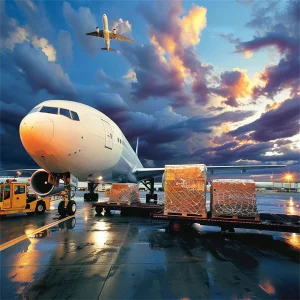
Our expertise covers multimodal transport networks, including express air cargo, ocean freight (FCL/LCL), and reliable cross-border railway links. Our logistics solutions are customized to address the unique regulatory and operational needs of each client. Whether managing temperature-controlled shipments, oversized industrial machinery, or complex dangerous goods like lithium batteries, we ensure that cargo is handled safely and professionally at every stage.
By combining advanced logistics technology, automated warehousing systems, and experienced in-house customs brokers, we manage the complexities of global shipping so that our clients can focus on growing their business. Our customer-centric approach is built on transparency, reliability, and cost-efficiency.
Review answers to key operational questions regarding contract optimization, logistics routing, and our service capabilities.
Select from our verified range of supply chain services, industrial materials, and equipment solutions engineered for global trade distribution.
 FSG Logistics