Latest Low Investment Fully Automatic Turnkey 98% Lysine Production Line Machinery
Lysine is one of the essential amino acids for humans and mammals. The body cannot synthesize itself and must be supplemented from food. Lysine is mainly found in animal foods and legumes, and cereals are low in lysine. Lysine has positive nutritional significance in promoting human growth and development, strengthening the body's immunity, anti-virus, promoting fat oxidation, and alleviating anxiety, etc.
📊
Process Flow Diagram
🛠️
Process Description
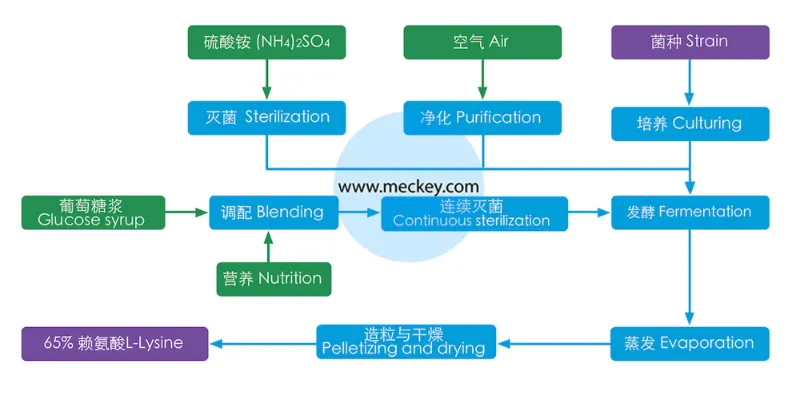
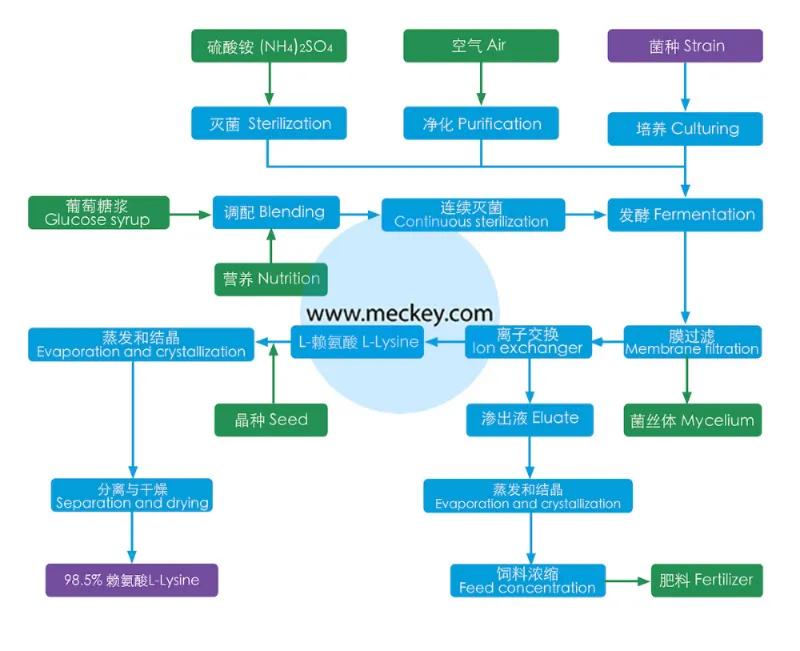
Material blending: Add auxiliary materials like CSL, molasses, salt, etc. to the glucose. The material is sent to fermentation tanks after continuous sterilization.
Air preparation: Raw air must be cleaned via multi-stage filter to ensure the quality of the air to fermentation. Oil-free screw air compressors should be applied.
Strain preparation: L-Lysine strain is corynebacterium glutamicum. It is selected and passed 45 hours culturing.
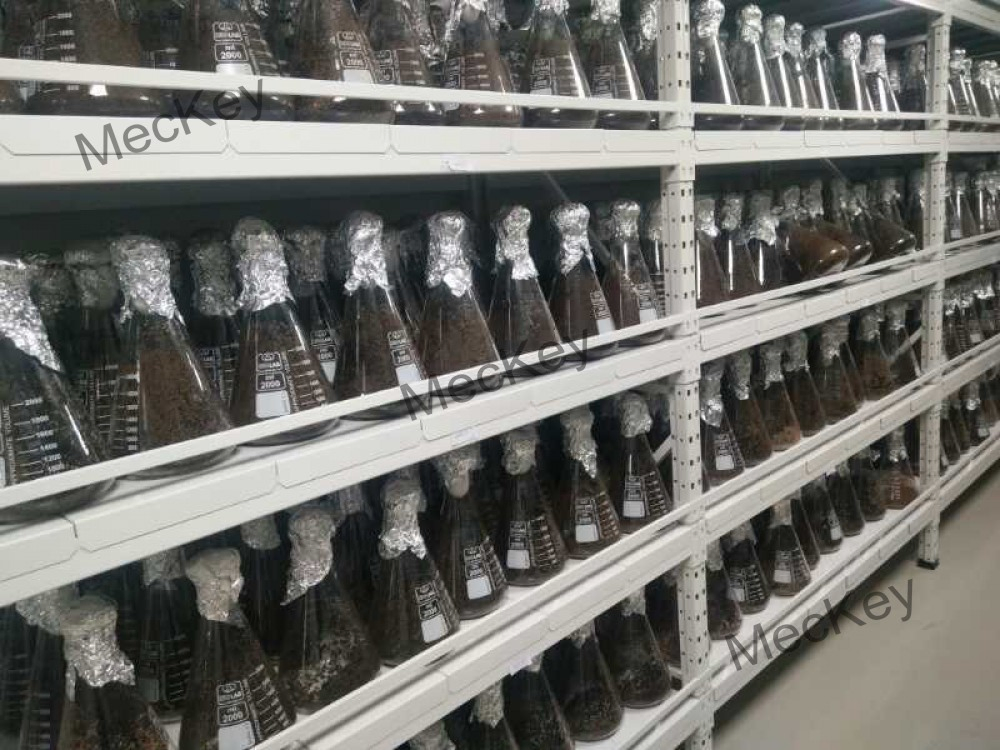
Seed preparation: The medium is prepared then sent to flask for further culturing of slant seed. The last culturing happens in seed tank with aid of air and hydrolisate.
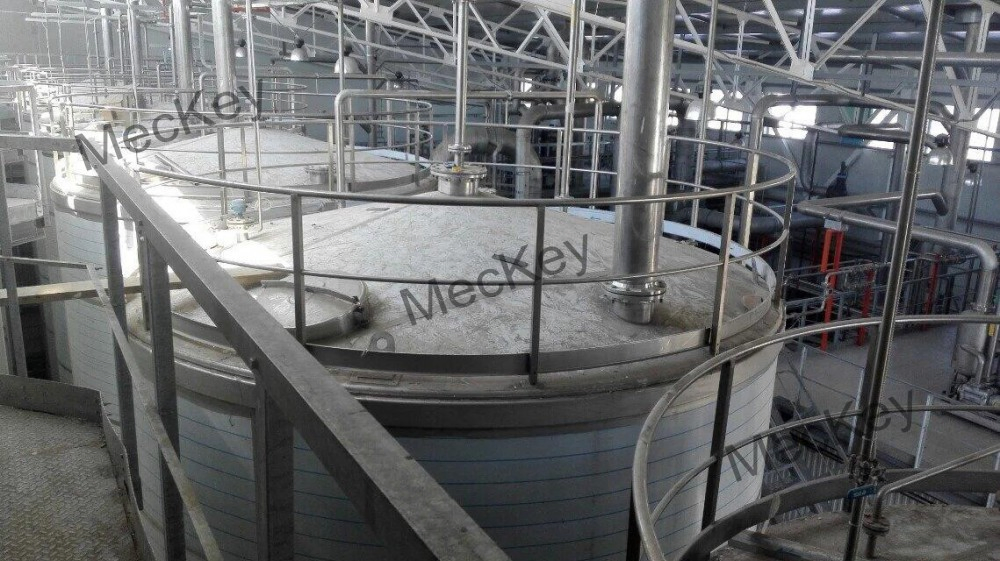
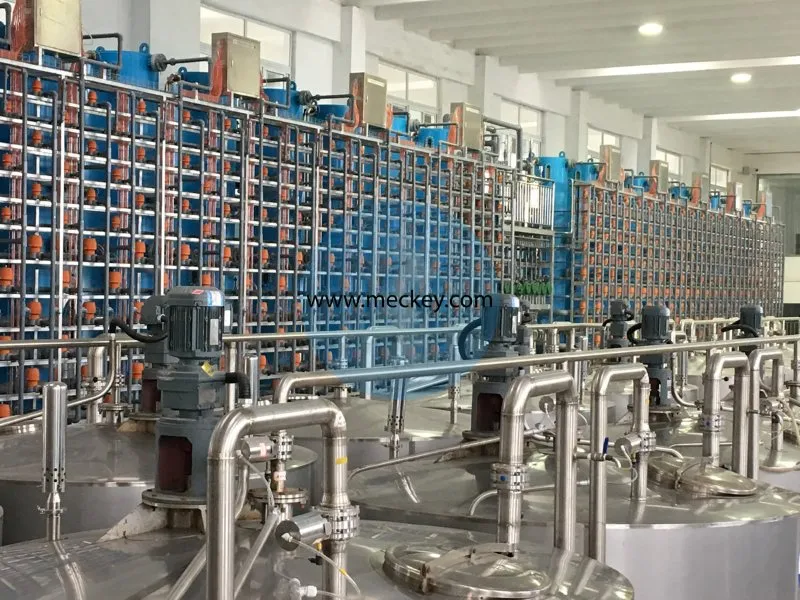
Fermentation: Production takes place in special fermentors under aeration, temperature and pH control. Sterile glucose syrup and ammonium sulfate solution are added continuously.
Mycelium separation: Through micro-filtration, the mycelium will be separated out for making nutritious feed.
Decolorization: Active carbon is added to absorb foreign colors, then the solution is filtered.
Ion exchange: Positive and negative ions like Fe, Mg, Ca and Cl, SO3 are removed by resins to purify the solution.
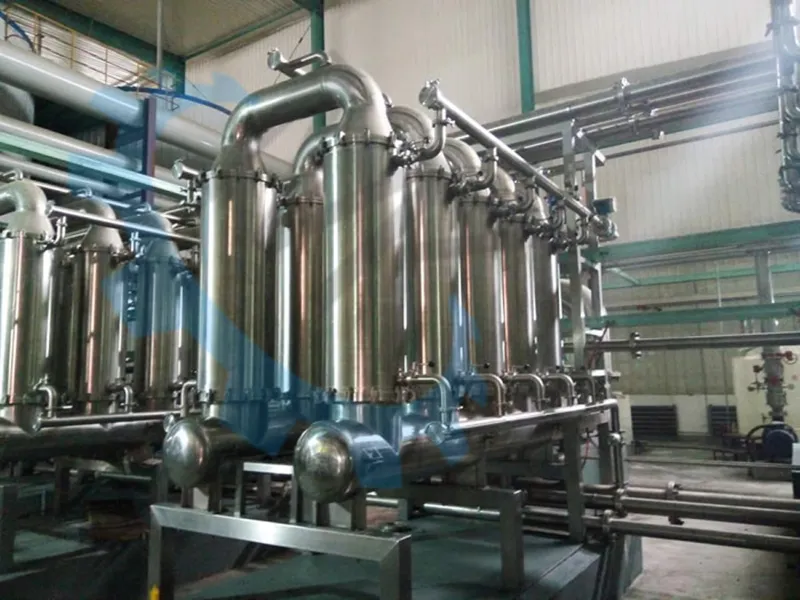
Concentration and crystallization: The eluate is sent to a vacuum evaporator & crystallizer to increase solid content.
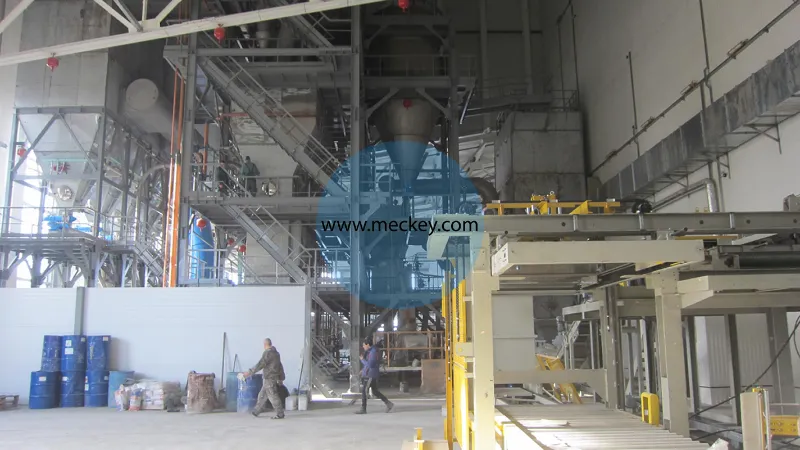
Separation and drying: Concentrated L-Lysine is separated into wet crystals and mother liquid. Wet L-Lysine is then dried in a flash or fluid bed dryer.
🏗️
Main Equipment
 FSG Logistics